

Kids Fencing Classes in Singapore
Fencing Masters runs kids fencing classes in Singapore that build focus, discipline and fitness through foil, sabre and epee. Since 1995, our Youth Academy has introduced children across Singapore to a sport that sharpens the mind as much as the body.
Why Fencing Is Great for Kids
Fencing asks a child to think several moves ahead while reacting in a split second, which is why parents often notice sharper focus and better self control after just a few sessions. It is also a full body workout that builds coordination, footwork and cardiovascular fitness without feeling like a chore, and every bout ends with a handshake, which keeps sportsmanship at the centre of the game.
- Improves concentration, discipline and decision making under pressure
- Builds fitness, agility and coordination through footwork and blade work
- Grows confidence as children earn every touch through their own effort
- Teaches respect and etiquette through the tradition of the salute
For a closer look at the developmental benefits, read our article on the benefits of fencing for children.
Our Youth Academy and Ages
Fencing Masters welcomes children from about age 3 through our private lessons, with structured group classes starting at age 7. A younger child trains individually by default and joins a group class once their aptitude suits it. Our Youth Academy takes children through the fundamentals of footwork, blade handling and bout etiquette before introducing foil, sabre and epee so each young fencer can find the weapon that suits them best.
Coaches progress children at their own pace, and many go on to compete once they have built a solid foundation. If you are unsure when your child should begin, our guide on what age kids can start fencing walks through what to expect at each stage. You can also learn more about the sport itself on our three weapons page.
How the Coaching Is Structured
Coaching here follows a syllabus rather than a timetable. Every fencer, whatever age they start, works through the same three stages, so a parent can always see where their child is and what comes next. The structure is the same for everyone. What happens inside it is not.
- Foundations. Coordination, balance and agility. The athletic base a child needs before a blade is useful to them.
- Fundamentals. Bronze, Silver and Gold. Footwork, blade handling, distance and the etiquette of the bout, taught the same way regardless of which weapon comes later.
- Weapon work. Foil, sabre or epee, in whichever weapon suits the fencer, building through progressive levels.
Coaches work to that structure rather than improvising from week to week. Children still progress at their own pace, and the stages are simply how we keep track of where each one has got to.
What the stages do not do is flatten everyone into the same fencer. Children arrive with different strengths: one quick but impatient, another careful and slow to commit, another tall for their age and still working out what to do with the reach. Coaching them identically wastes whatever each of them is already good at. The stages set the order of what gets taught. How it is taught bends to the child.
We also ask what the child actually wants out of it, because that changes how hard a coach pushes. Some children are aiming at a squad place and a competition calendar. Most want to enjoy an hour a week and get good at something. Both are proper answers. A child who wants to compete is trained for it, and a child who does not is not quietly steered towards a competition calendar they never asked for.
That is also why we do not publish a fixed coach to fencer ratio. How many coaches are on the floor is decided by who is in the room. A group of young beginners needs more hands than the same number of experienced fencers, because beginners need correcting constantly and safely, so that is how the session is staffed.
Safety and What Is Included
Safety is built into every class. All protective gear, including masks, jackets and weapons, is provided for a child's first session, so there is no equipment to buy before trying the sport. Our coaches are NROC-registered, meaning they are trained and certified under Singapore's national coach accreditation framework, and class sizes are kept small so every child gets close supervision.
Parents often ask whether fencing is safe for young children, and the short answer is yes, when it is taught properly. Our article on whether fencing is safe for kids in Singapore explains the safeguards in more detail, and our FAQ covers common questions from new families.
How to Start
No experience or equipment is needed to begin. New students come in for a trial session, meet a coach, and try the sport with full gear provided. From there, our team will recommend whether group or private lessons are the better fit based on your child's age and comfort level.
Ready to see if fencing is right for your child? Book a trial class and our team will take care of the rest.
What to Expect When You Join
We keep the start simple. All protective gear is provided on loan for your child's entire first set of lessons, so there is nothing to buy to begin. Once the first set is complete, fencers move to their own kit, for hygiene and so their equipment fits and feels the same every time. Parents are welcome at the trial, and drop-off starts once lessons are paid: our FAQ explains the arrangement and why it helps children settle in faster.
The full picture is in what to expect when you join, and the thinking behind drop-off is in why we ask parents to drop off.
Kids fencing FAQ
Full protective gear, including mask, jacket and weapon, is provided for the first session, so there is nothing to buy before trying a class. Families who continue with us can look into personal gear later if they wish.
Younger and newer fencers start with footwork, blade handling and bout etiquette in a small group setting before being introduced to bouting. Coaches progress each child at their own pace rather than pushing everyone through the same drills at once.
Our coaches are used to working with a wide mix of temperaments, from quiet first-timers to children who need to burn off energy. Fencing gives both types a clear structure to focus on, which tends to bring out steadier behaviour over time.
Beginners are introduced to the basics common to all three weapons, foil, sabre and epee, before choosing the one that suits them best. There is no need to decide on a weapon before starting.
Group classes are organised by age and readiness, generally from age 7, with private lessons available from around age 3 for younger children. Enquire with our team and we can advise on the best arrangement for siblings.
Our coaches assess this as training progresses, looking at comfort with footwork, blade handling and following instructions in a group. We will let you know when your child seems ready and talk through the options with you.
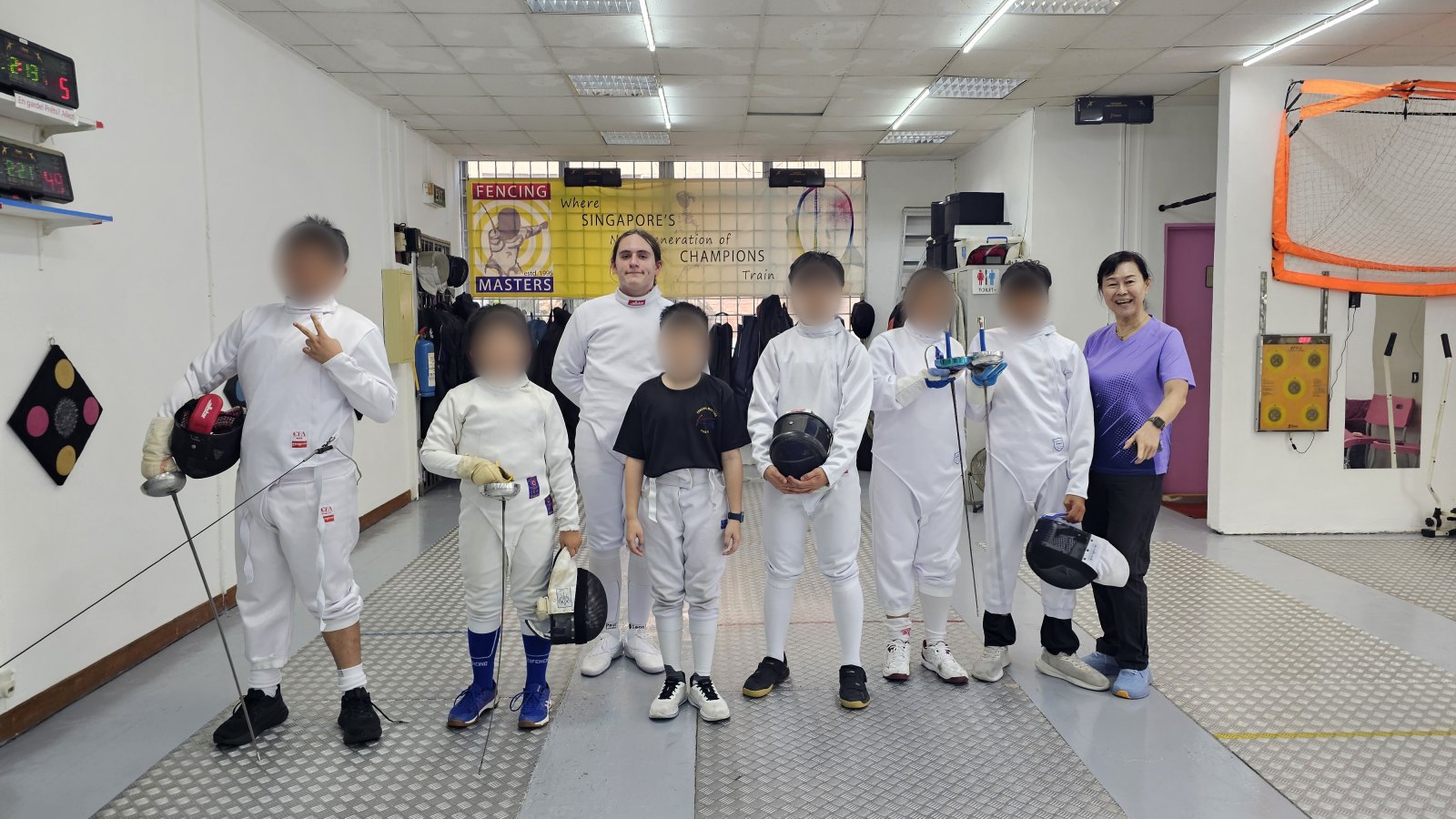
Give Your Child a Head Start with Fencing
Reserve a spot in our Youth Academy today and let your child experience Singapore's most focused and disciplined sport firsthand.
Book a Trial Class