

One sport. Three blades.
All three weapons teach the fundamentals of fencing: footwork, distance, timing, and strategy. But each demands a different approach. Some fencers gravitate naturally to one weapon. Others train in all three and find their voice over time.
At Fencing Masters, we encourage every beginner to experience all three before settling. Our coaches will guide you through the feel, rhythm, and thinking of each weapon so you can make an informed choice, or not choose at all.
Foil, then sabre, then épée. Each weapon fights to its own rhythm. Tap to watch again.
Foil
Foil is the classical weapon of fencing, emphasising precision and control. Points are scored only by the tip of the blade, striking the torso and neck. Foil teaches discipline, footwork finesse, and strategic patience: the ideal foundation for beginners.
You prefer precision over power. You enjoy thinking several moves ahead. You want to master footwork and blade control from day one.
Sabre
Sabre is the fastest, most aggressive of the three weapons. Points are scored with both the blade edge and tip, striking the head, arms, and torso. Sabre fencing is explosive, athletic, and rewards speed and agility above all else.
You are naturally aggressive and fast-moving. You enjoy dynamic footwork and split-second decisions. You want a high-energy, contact-driven sport.
Épée
Épée is the heaviest weapon and the only one where the entire body is a valid target. Points are scored only by the tip. With no right of way rule, Épée rewards patience, distance control, and tactical brilliance. It is the thinking fencer's weapon.
You think tactically and play the long game. You are patient and observant. You want a weapon that rewards perfect timing and distance control.
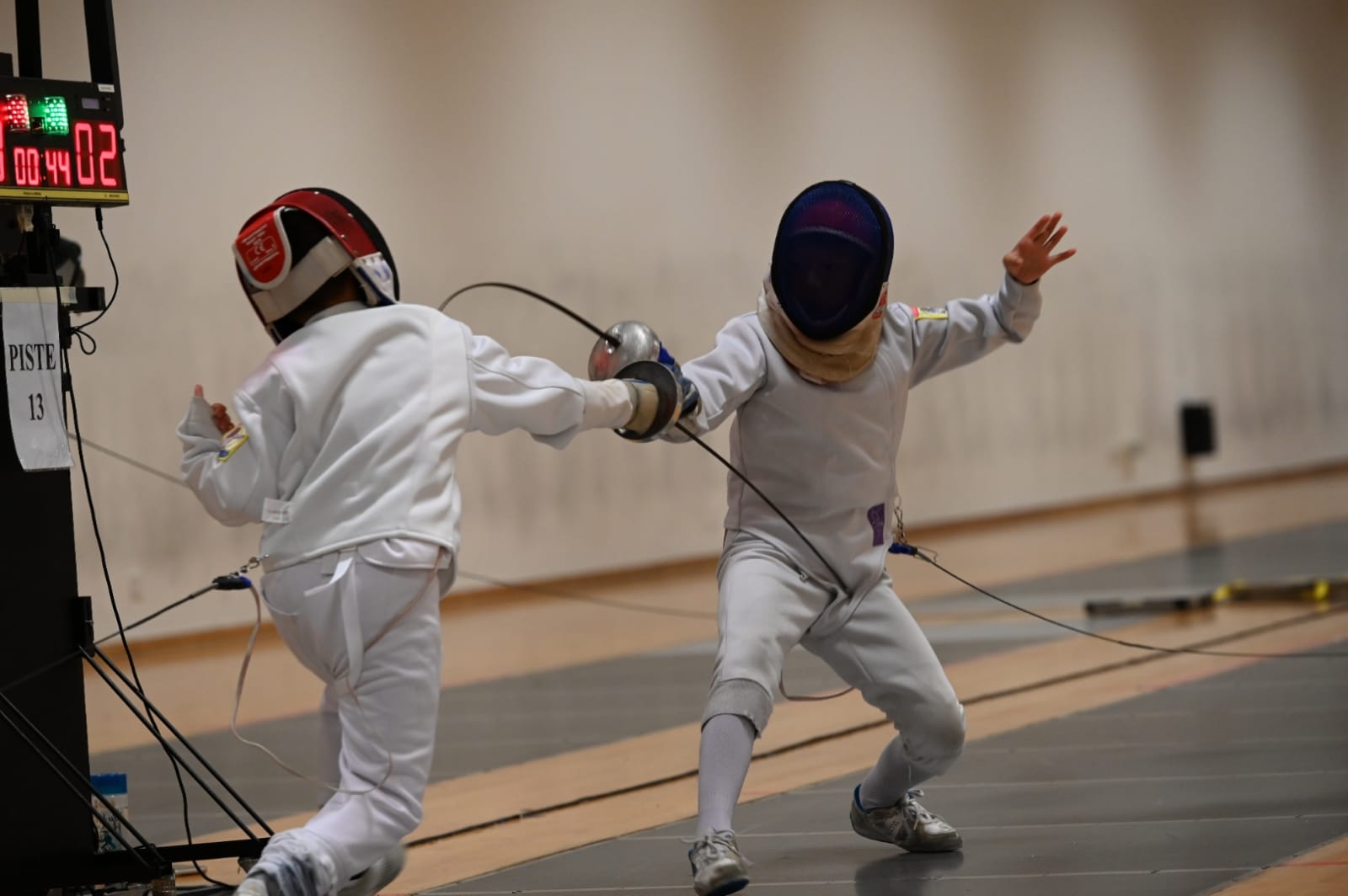
Side by side
All three weapons teach the fundamentals of fencing, but they demand different strengths and appeal to different personalities. Many fencers try all three before settling on their favourite. Some never settle, and compete in multiple weapons.
| Aspect | Foil | Sabre | Épée |
|---|---|---|---|
| Target area | Torso and neck | Head, arms, torso | Entire body |
| Blade technique | Tip thrusts | Cuts and thrusts | Tip thrusts |
| Right of way | Yes | Yes | No |
| Pace | Controlled, strategic | Fast, aggressive | Deliberate, tactical |
| Suits | Precise, analytical | Aggressive, dynamic | Tactical, methodical |
A brief history
- Foil
Foil emerged in 18th-century France as a practice weapon, derived from the court sword. Designed to be lighter and safer for training, it focused on pure thrusting technique. Foil remains the foundation of classical fencing instruction around the world and is the weapon most beginners start with.
- Sabre
Sabre descends from the curved cavalry sword used across Eastern Europe and Hungary. Its cutting techniques reflect a proud military heritage. Sabre was introduced to the Olympic programme in 1896 and remains the fastest, most athletic of the three weapons.
- Épée
Épée is the descendant of the dueling sword used in 19th-century formal duels. It is the heaviest and stiffest weapon, demanding absolute precision and perfect distance control. Épée was the last of the three to enter the Olympics, introduced in 1900.
Keep reading
- Foil vs sabre vs épée: how the three weapons compare
- Which fencing weapon should a beginner start with?
- Ready to try them? See our adult classes and kids classes.
Try All Three
The best way to find your weapon is to fence with all three. Our coaches will guide you through the technique and spirit of each, and help you discover which one calls to you. No experience needed.
Book a trial lesson